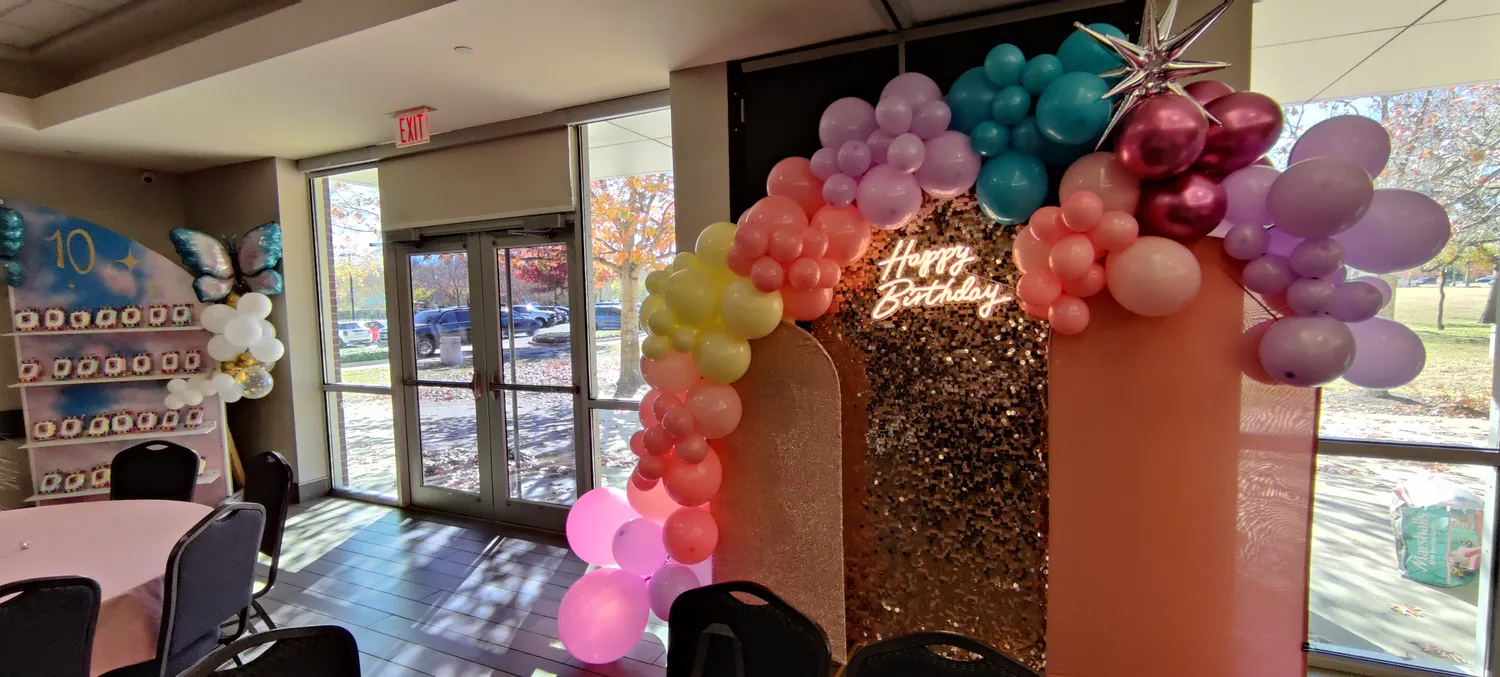
Most clients who book us for a wedding shower, an opening, or a Sweet Sixteen call us asking for “an organic balloon garland” without knowing exactly what we mean when we say yes. That’s the term that’s everywhere on Instagram right now, and the install style behind it has become almost universal for events of every kind, but the actual craft of building one well is a lot more specific than it looks in the photos.
This is the post that explains what we mean.
What “organic” actually means
A classic balloon garland uses balloons all the same size, evenly spaced, in two or three colors, arranged in a clean line. It looks like what most people would describe if you asked them to draw a balloon arch from memory: uniform, tidy, symmetrical.
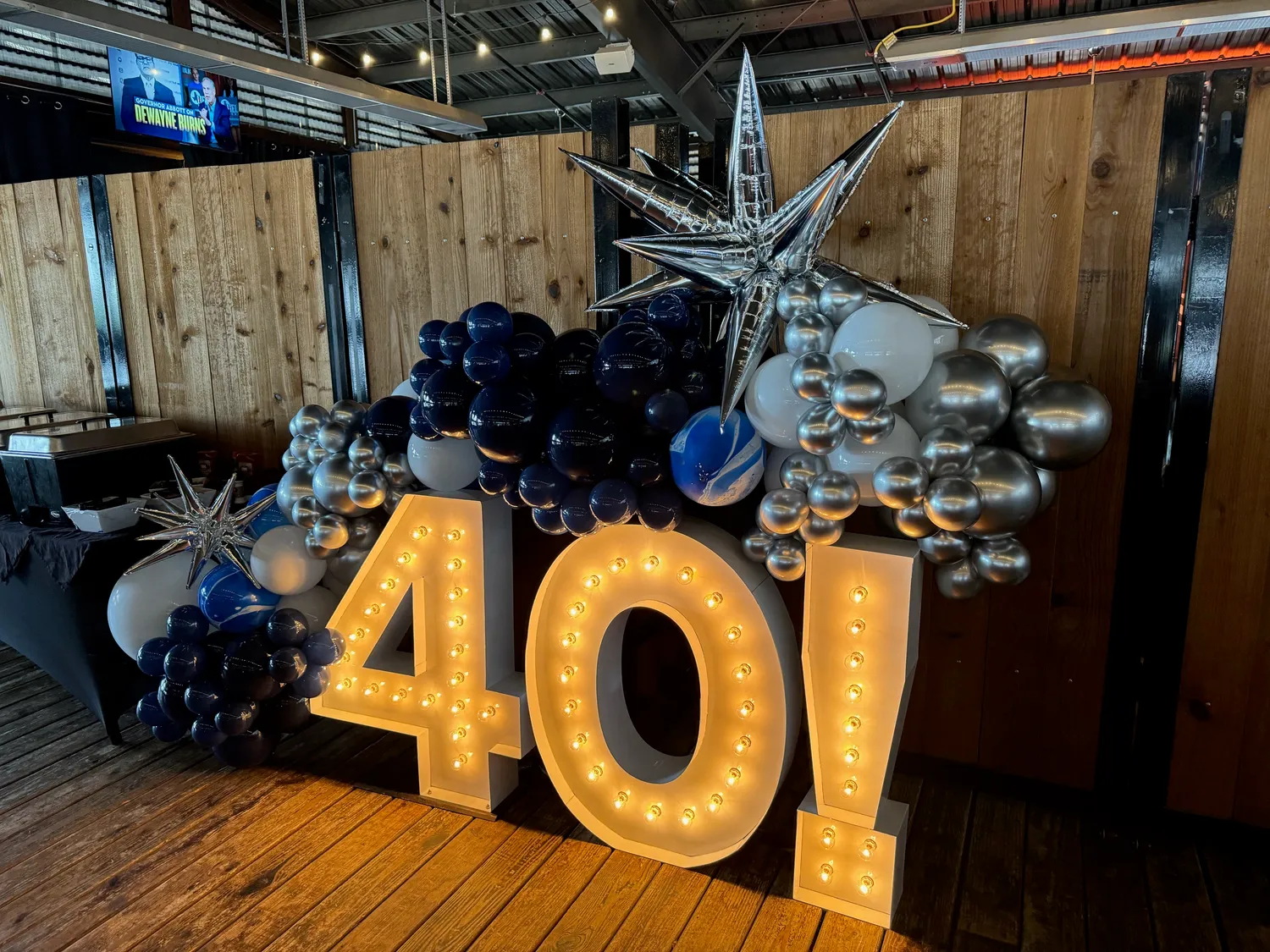
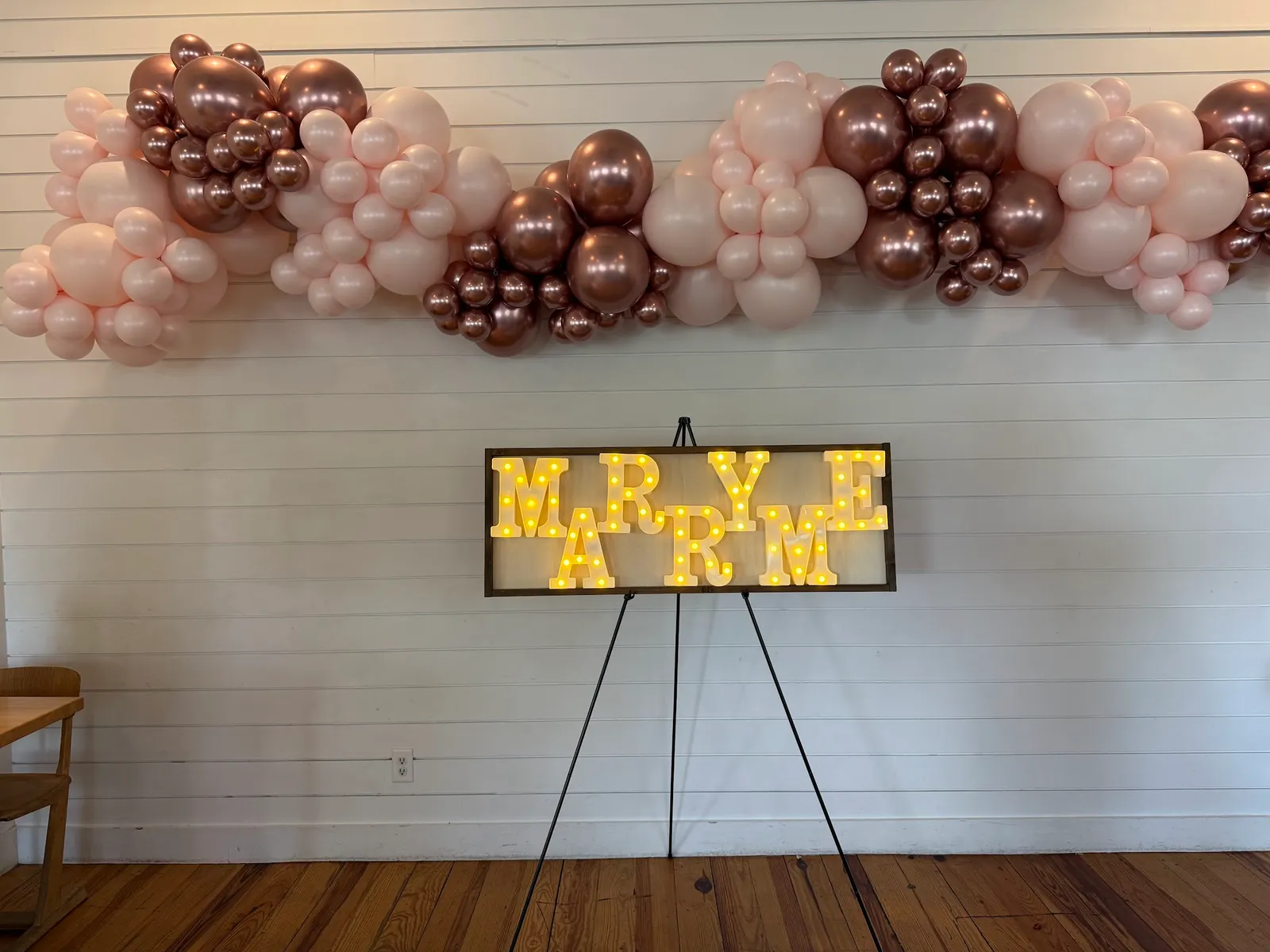
An organic balloon garland looks nothing like that. It mixes three balloon sizes (16-inch, 11-inch, and 5-inch latex), uses four to seven colors layered on top of each other, and arranges them in clusters that vary in density along the length of the garland. The whole point is for the garland to read more like foliage on a real plant than like a row of decoration on top of a wall. Full where it should be full, sparse where the eye needs a break, with the balloons looking like they grew into that arrangement.
When you see a balloon install that has texture and depth instead of looking flat, that’s an organic garland.
How we build them
Three things shape the install on every job we do.
The first is the palette. We usually pick five to seven colors in close tonal families, layered the way watercolor washes layer in a painting. A bridal shower might pull blush, dusty rose, mauve, ivory, and chrome rose-gold all into the same garland. A kid’s birthday might pull hot pink, lavender, mint-aqua, butter yellow, chrome silver, and chrome rose-gold (and a few cow-print accents) into the same arch. The closer the tonal family, the more sophisticated the result reads. The wider the contrast, the more playful it reads. We adjust to what the event wants.
The second is the sizing. We anchor with 16-inch latex (the big rounded ones at the base of any organic install that give the structure its visual weight), fill through the middle with 11-inch balloons in matching and complementary colors, and tuck 5-inch balloons into every gap so the surface reads as one continuous textured cluster. From across a room, this is what makes the garland look like foliage instead of a row of party balloons. It is the single biggest reason an organic garland looks the way it looks.
The third is the placement of the accents. Chrome balloons (the shiny metallic ones), specialty foil shapes (starbursts, stars, hearts, numbers, letters), and any florals or greenery go in last, on purpose. We place each accent piece individually for how it’ll catch the light at the venue, where guests will gather, and where the photo angles will land. A chrome silver balloon in the wrong spot disappears into the cluster. In the right spot it pulls the eye exactly where you want it.
What changes by venue and event
Indoor garlands behave differently than outdoor ones. Inside, balloons last for days at a time. Outside in a Texas summer, latex balloons soften and lose their shape inside a couple of hours of direct sun, and we either build with that timeline in mind or use chrome-and-foil-heavy designs that handle the heat. We will tell you which makes sense for your event when we quote you.
Event type changes the design too. A wedding garland reads cleaner: closer tonal range, more white and metallic, florals worked in. A kids’ birthday reads louder: more colors, bigger contrast, cow-print or theme-specific latex, foil shapes. A grand opening reads bigger: more length, more visual presence from the sidewalk, brand colors. The skeleton is the same. The dialing is what makes the install look like it was made for your event.
What you pay for
Pricing varies with length, complexity, and the accent count. Our pricing page lists the linear-foot rate for classic and organic garlands and starting points for the most common add-ons (chrome accents, foil shapes, florals, columns, custom letters). For a typical install of 8 to 12 linear feet with chrome accents and a few foil starbursts, most jobs land between roughly $300 and $700, depending on which colors and add-ons you choose.
What you’re paying for, when you book us, is the design work, the balloon mix, the on-site install, and the part you can’t see in the photos: the years of practice it takes to know exactly which 5-inch balloon to tuck into which gap, so the whole thing looks like it grew there.
Want one for your event?
If you’re hosting in Coppell, Grapevine, Colleyville, Lewisville, or Flower Mound, an organic garland is the install we get asked for the most often, and the one that does the most to make a room feel like the event is actually happening.
Tell us your date and your palette and we’ll send a design idea and a clear quote.